Beginning in the late 1960’s, democracy festivals have been established in several countries – mostly but not exclusively Nordic countries. The biggest attract tens of thousands of visitors every day and have become central events on the national political calendars.
The Danish Folkemødet (or People’s Meeting) is the largest and, arguably, the most successful of the democracy festivals. Spread over three days, it attracts over 100,000 visitors. It is hosted in a small town on the Baltic island of Bornholm.
The event has been very successful in its primary objective: promoting informal political debate in a fun setting and trying to move beyond political polarisation. It has also been successful in promoting the (previously rather stagnant) regional economy of Bornholm.
At a time when politics can seem toxic, the need for a new way of doing politics is more important than ever. We need to find ways to “disagree agreeably”. The team behind the People’s Meeting have strong Scottish/Danish connections and our aim is to launch a similar event in Scotland.
Democracy festivals
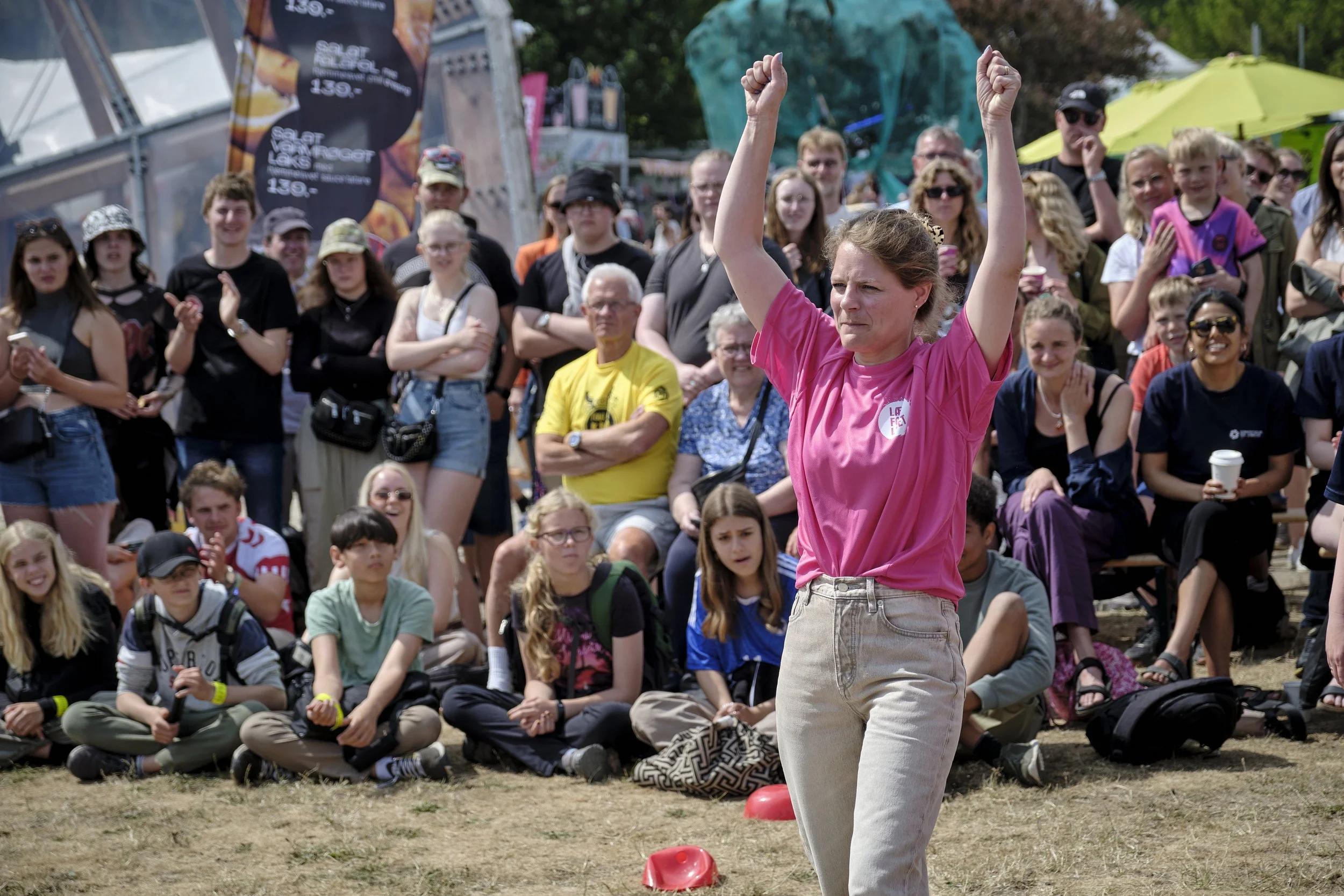
Crowds gather to watch Folkemødet event
The democracy festival concept began in 1968. Olof Palme, then Sweden’s Minister of Education –later to become Prime Minister – delivered a speech from the back of a lorry in Almedalen Park in Visby, a small historic city on the Baltic island of Gotland. At the beginning it was a one man show: Palme was the only speaker until 1974!
The event developed into a political “summer camp” for the Social Democratic Party. The move towards the Democracy Festivals that we know today came in 1991 when the Almedalsveckan became independent of the Social Democratic Party and opened participation to all parliamentary parties.
The festival started slowly – with an estimated 2,500 participants in 2005. But the interest and numbers grew steadily and ten years later there were 30,000 visitors.
The central idea was that politicians, businesses, the press, NGOs and most importantly citizens come together for free-of-charge seminars and encounters.
It is a place where politicians can meet their constituents face-to-face (and in a fun, social context). This remains the guiding philosophy of all democracy festivals.
The beginnings
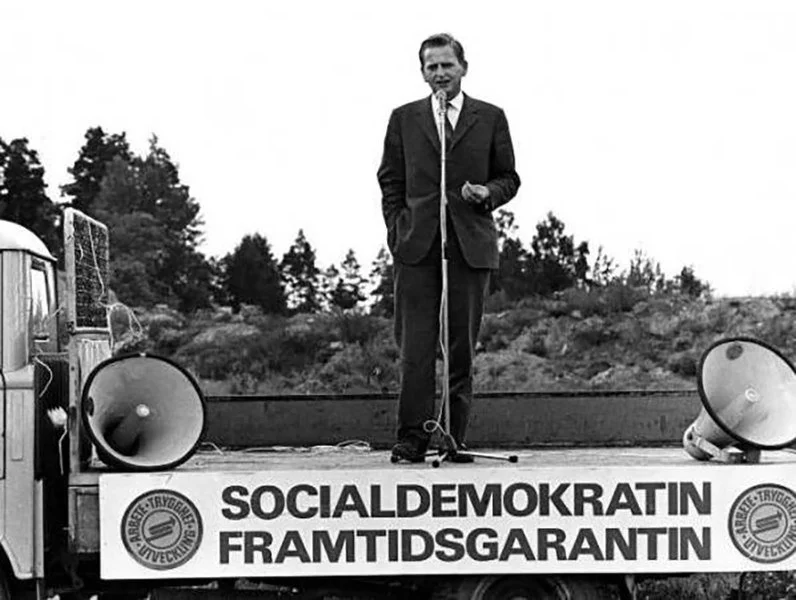
Olaf Palme launches the first democracy festival in 1968
Democracy festivals are places for informal discussion, networking and brainstorming. The atmosphere is low key and non-threatening: a place to try out new ideas.
Challenging party dogma is a virtue and not a headline. It is not a place for big announcements or party-political conflict. This is for party conferences. In the words of the Communications Director from the Danish Folkemødet, it is a “place for long answers and not Twitter/X soundbites.”
Democracy festivals are avowedly non party-political. But the active support and engagement of all political parties is essential for their success.
All parties and movements can participate and at the Folkemødet political parties represented in parliament each get a 30 minute slot on the main stage.
Encouraging the active participation of youth in political discussion and debate is an explicit objective.
Key concepts
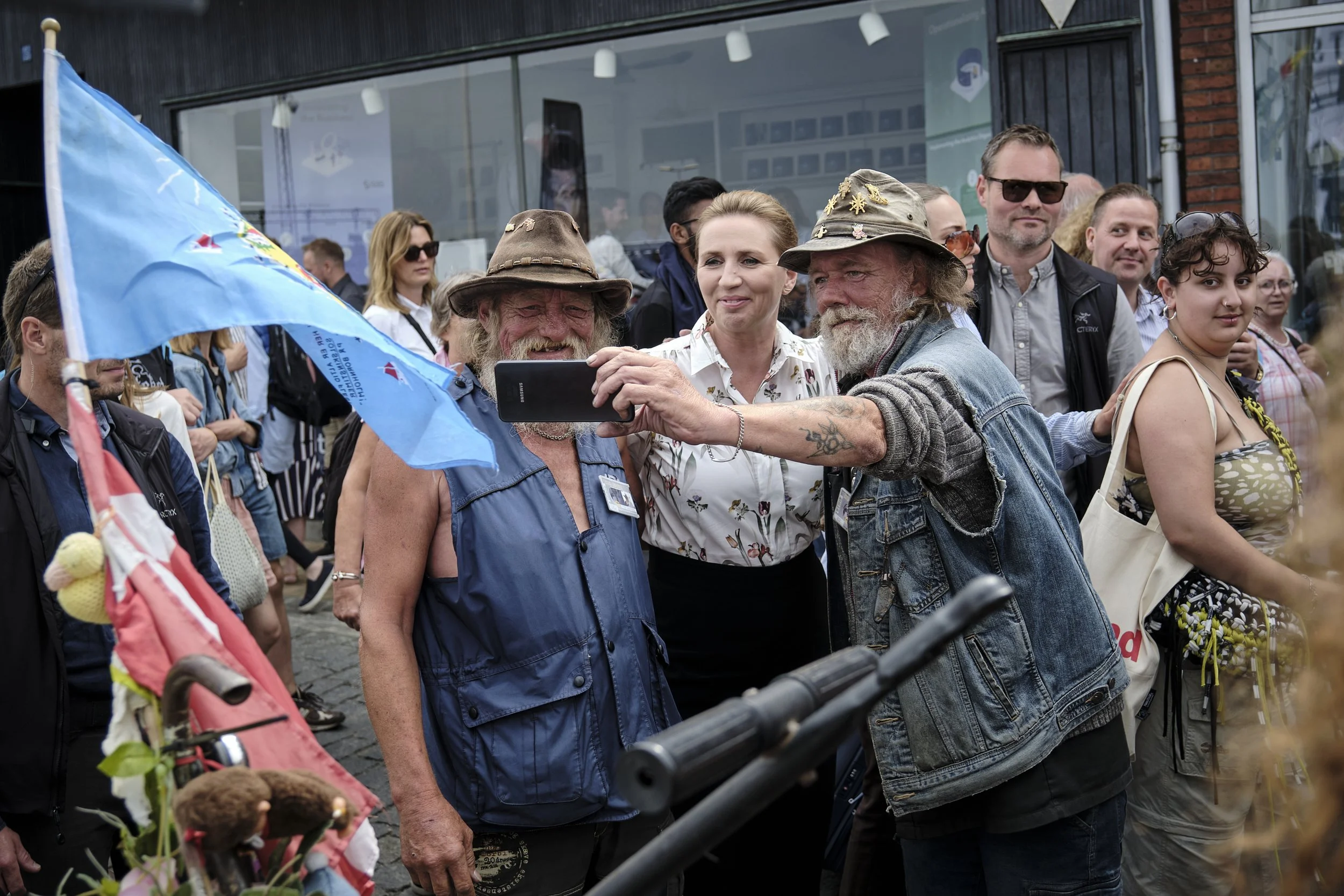
Danish PM Mette Frederikson meeting visitors
Folkemødet - the Danish experience
Folkemødet was launched in 2011 by Danish minister Bertil Haarder and the mayor of Bornholm Winni Grosbøll. A small delegation of Danish politicians attended the Swedish festival Almedalsveckan in 2010 and were so impressed with the concept that they decided to bring it to Denmark. Haarder later said, “I wanted a mixture of a summer camp for grown-ups, a Roskilde Music Festival and a political fair – and that’s exactly what I got.”
In the first year there were some 2,500 visitors and 235 events. All party leaders came and it developed into and a mainstay of the Danish political calendar with an estimated 60,000 visitors and over 3,000 events.
Website the “Local List” summarises:
It’s a unique event in that it is the one time of year where practically everyone who’s important in politics is gathered in the same place at the same time. This allows a large variety of events, debates, and networking to happen in a transparent fashion that includes the voting public. Everyone wins; the politicians, interest groups and other organizations are given a platform that helps them reach thousands of people, politics is made more accessible to the people, and a little part of peripheral Denmark (the island of Bornholm) suddenly gets to have its moment in the sun.
As Folkemødet grew in popularity, the organisers aimed to increase youth engagement in its political events, and made it a priority to reach out to younger audiences.
To achieve this, Folkemødet launched Youth Agenda. Youth Agenda is a partnership with the Tuborg Foundation which aims to engage 18,000 young people to participate In Folkemødet by 2026. This is done by subsidising travel and accommodation costs for young visitors.
School children are also taken on trips to Folkemødet to learn about politics and get involved at an early age.
Folkemødet has created an area of the festival called the Youth Square which provides a space for youth led initiatives to set up stalls, activities and events.
By 2025 Folkemødet has made great progress in including young people, and youth engagement is at an all-time high.
Youth
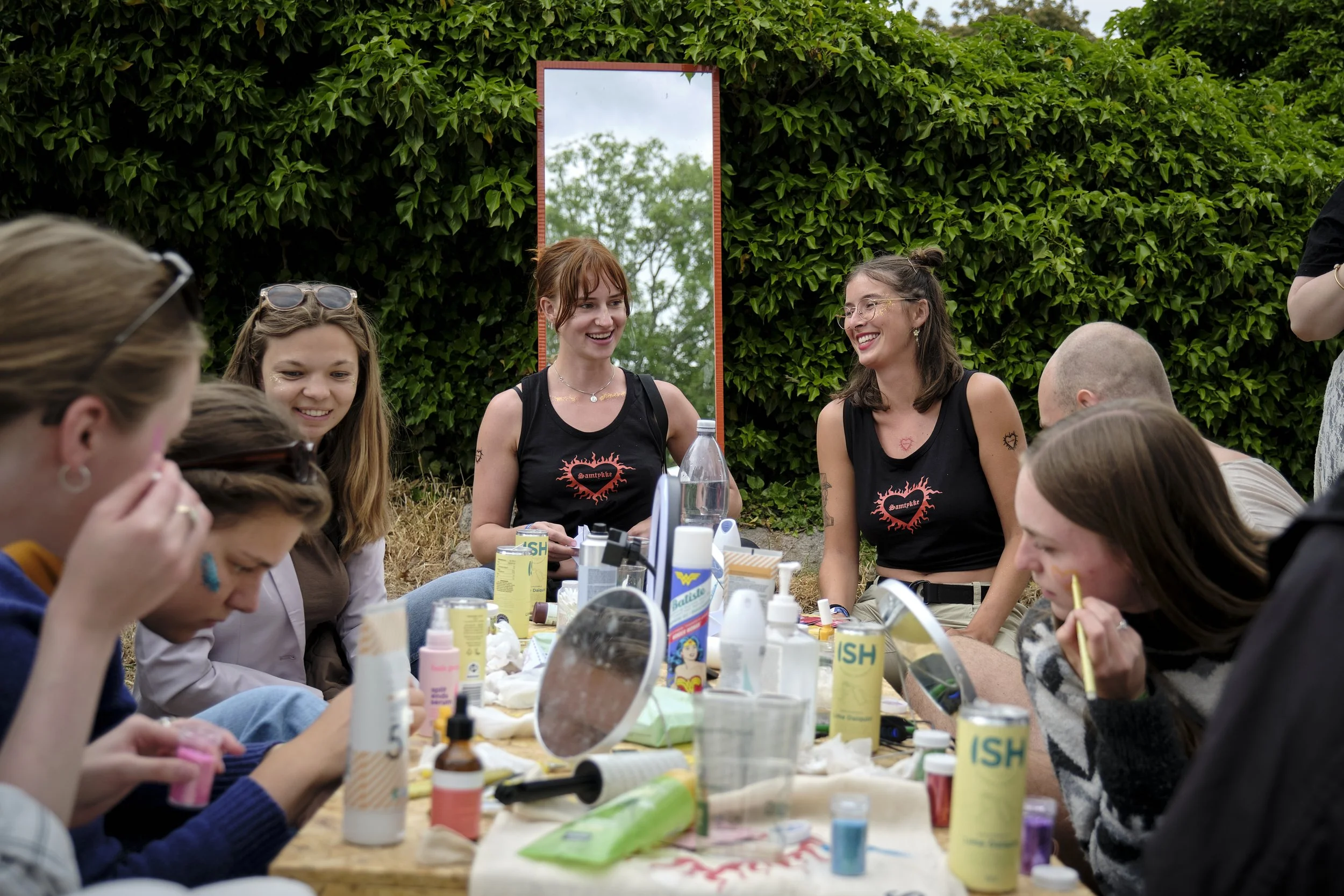
Youth is now a central element of Folkemødet
The Folkemødet takes place in and around the village of Allinge on Bornholm, a village of 1,500 people, in the north-west of an island of 40,000. The streets are closed and the whole village is taken over by tents, pavilions and stalls. Bornholm is a popular holiday destination and has excellent tourist infrastructure. It is about 3 hours travel from Copenhagen.
Being set in the periphery is deliberate – a move of politics away from Copenhagen. The organisers see distance from the capital as ESSENTIAL. This creates the vibe of most people staying overnight and mingling.
Allinge was chosen as the Bornholm venue because it has the best tourist infrastructure, the ability to expand outwards (not only for events but also camping and parking) & fun sights nearby. A big part of the success of the event is the continued support from the local administration.
Hotels, summerhouses, B&Bs and camping are the main accommodation options. Bornholm is a tourist destination so there is considerable choice. The organisers leave all of this to the participants and simply provide a link to the local tourist board.
Location
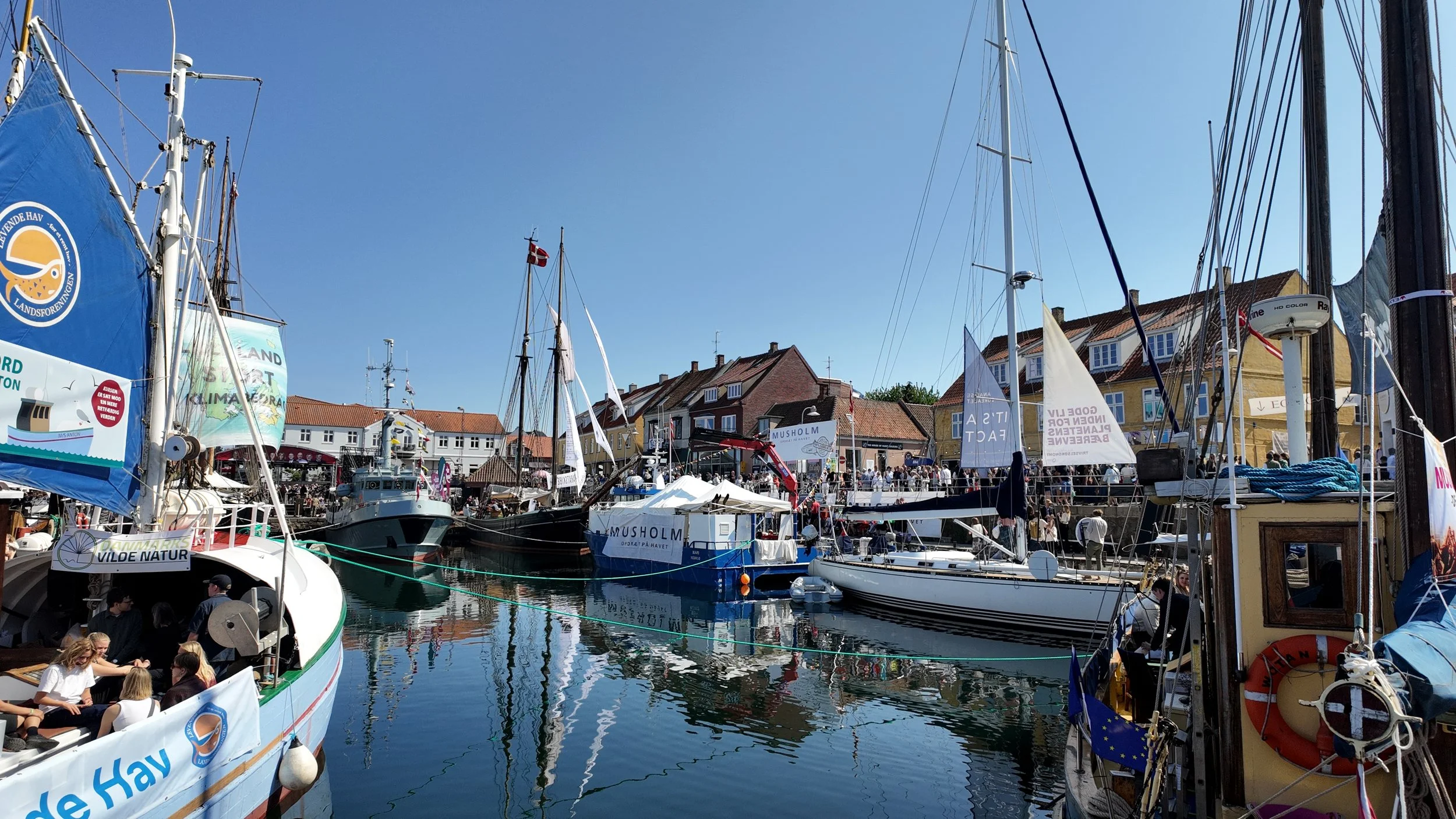
Allinge harbour is transformed into a space for public debate
There are main stage events and side events from all political parties - normally more than half of all MPs attend. There are also events and stalls from media, businesses, ministries, non-government organizations, and lobbying groups. In addition to the political events there is entertainment in the form of quizzes, performances, film screenings and concerts. In recent years there have been approximately 3000 events hosted by over 1000 organisers.
Every party gets half an hour on the main stage at a time when there are no side events (most opt for a speech from the leader). The parties with the most electoral support get first choice of the slots.
It is up to “organisers” (i.e. organisations attending) to come up with events if they can find a location. Key principles are that events are free, not commercial and not offensive. Typically, they range from lectures, panel discussions, debates, quizzes and workshops. Participants can also attend TV and radio recordings. Celebrity guests are often invited: for example, Pussy Riot from Russia (speaking not singing).
Most events are in tents. Public buildings in Allinge are also used and a press centre is set up.
Programme
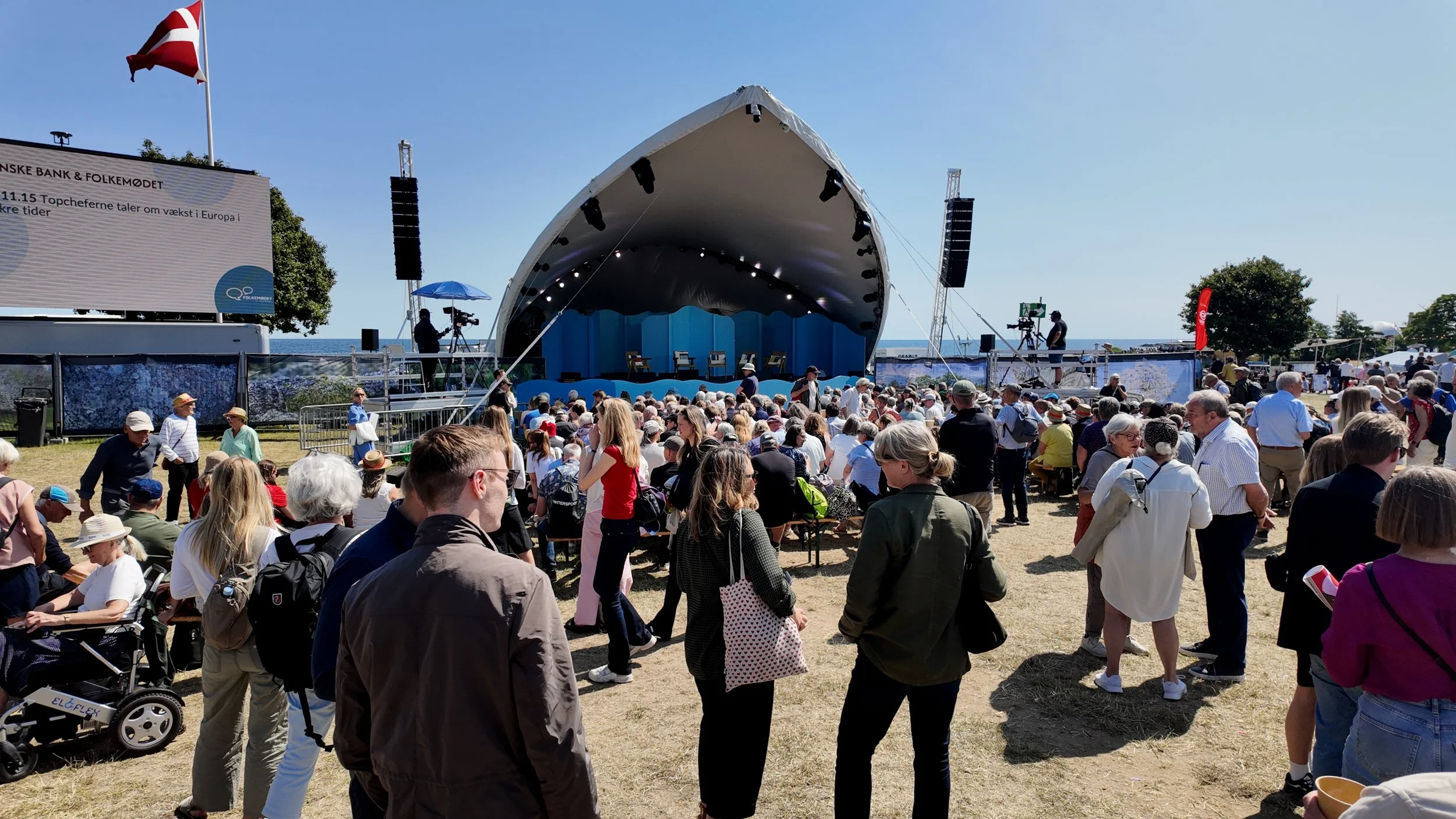
Folkemødet main stage
The Danish event is of very considerable interest for the local Bornholm economy, attracting tens of thousands high-spending visitors in a period (mid-June) before the peak tourist season.
The direct impact on the local economy can be compared to hosting golf’s Open Championship. Studies have shown that the Folkemødet has brought a massive return for the hosts – 100%+ increase in local taxes and revenues.
This does not even take into account the marketing and PR advantages of the event: Bornholm attracts the country‘s top economic and political leadership once a year and this has helped it become an increasingly trendy and upmarket destination.
Other local governments in Denmark would love to get this prize and Bornholm is very happy that they have it. One sign of its success is that there are now over 20 “local” people’s meetings each year in other Danish locations typically focusing on specific themes (e.g. climate change).
Economic benefits
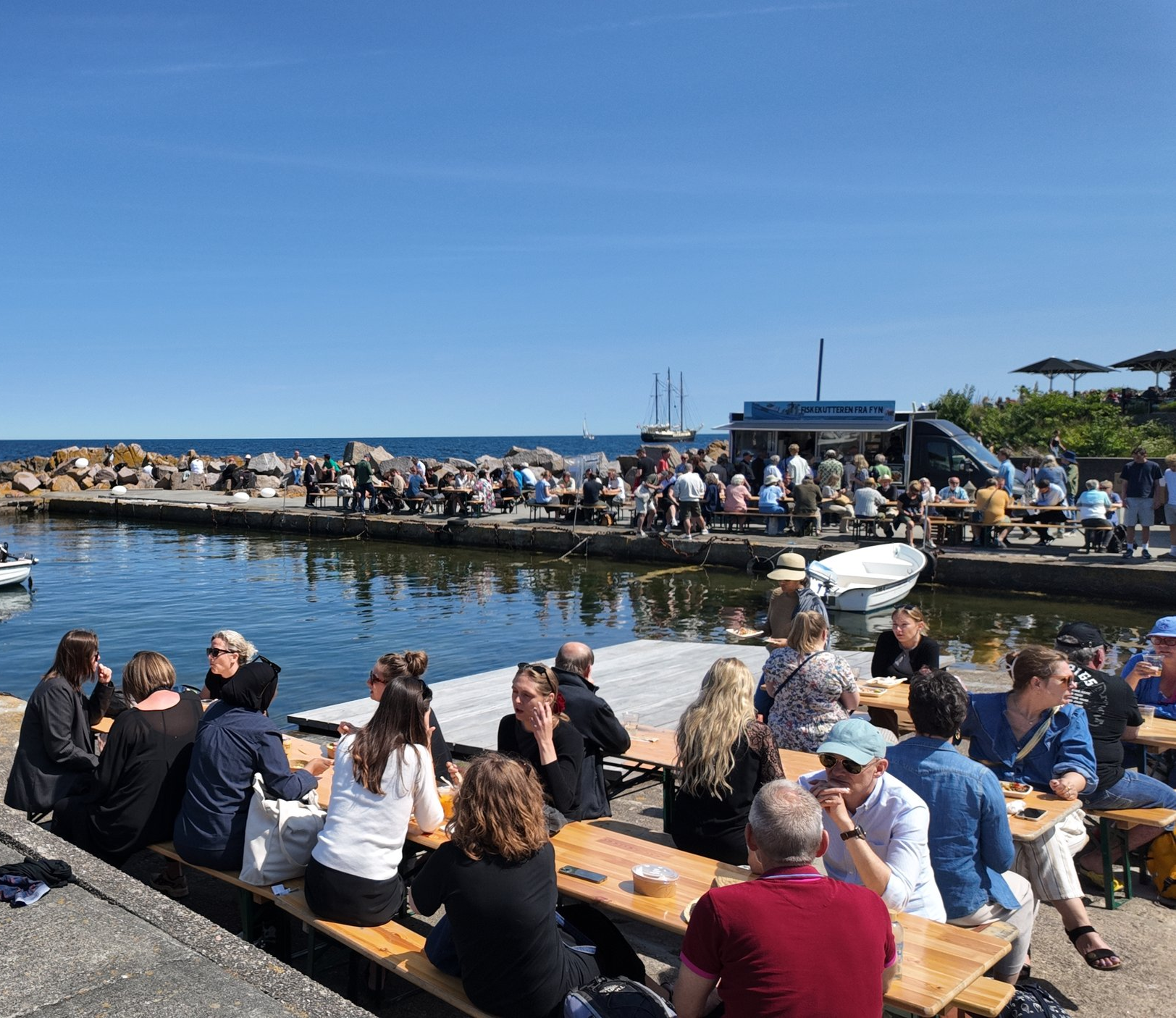
Visitors enjoy plenty of food and drink options
From 2011 to 2015 the local commune took the lead in organising the event. In 2016, when the event was well established, responsibility passed to a new association the Foreningen Folkemødet.
This allowed revenues generated by the event to be passed on to the event and allowed it to become financially sustainable. It also allowed for the professionalisation of the organisation. However, the association still organises the event on behalf of the municipality who have the final say.
The policy steer for the association is provided by a Board of Governors (often well-known personalities from media, politics as well as local business) to provide general advice.
The Governors appoint a management board of eight (including the local mayor) to guide the secretariat. All work is pro bono although travel and accommodation expenses are covered.
The actual organization of the event – from sponsorship through to communication and logistics - is done by a full-time secretariat. The secretariat also enlist (and pay for) the support of professional festival organisers.
Organisation
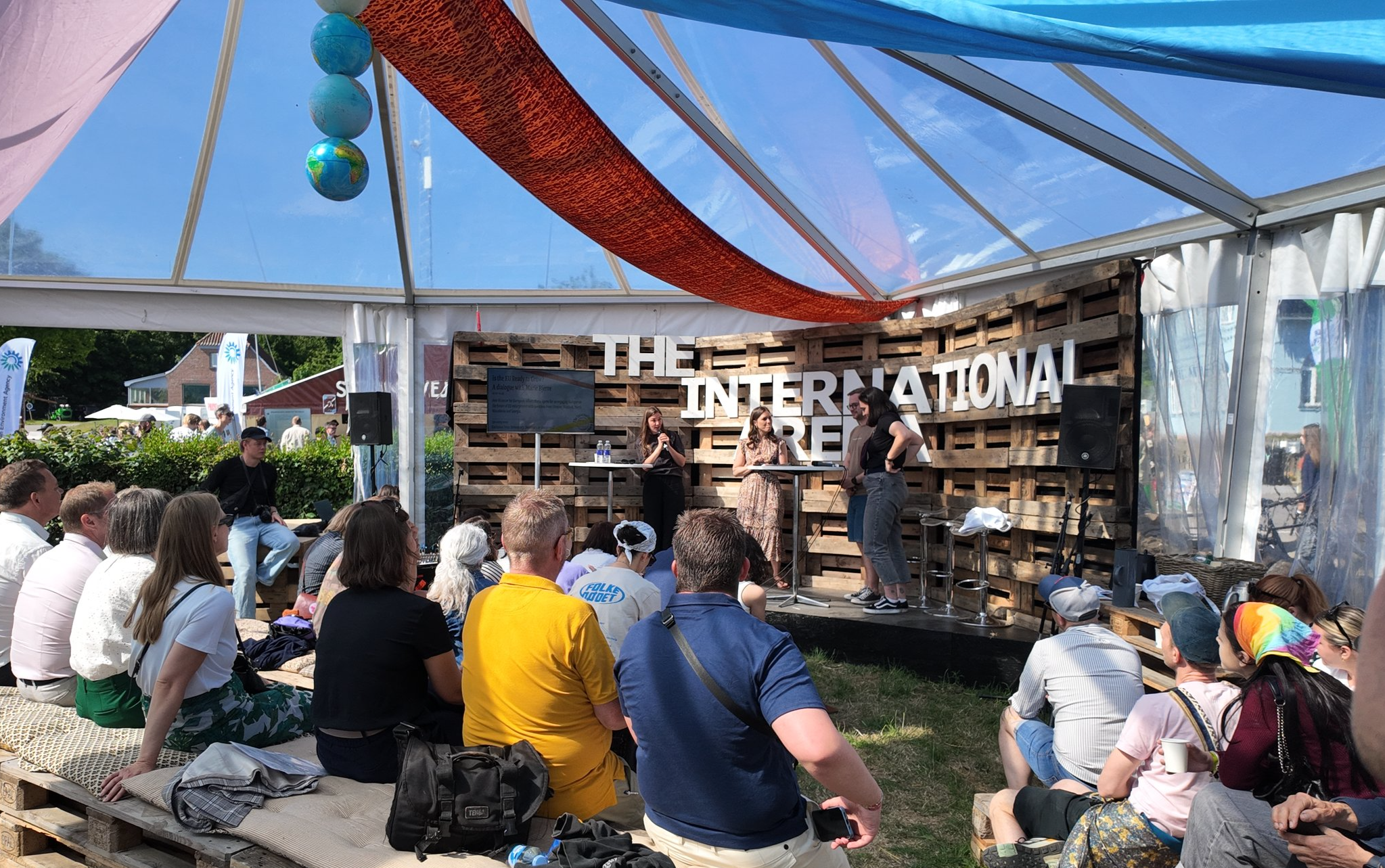
Danish minister for European affairs Marie Bjerre at a panel discussion
There are many democracy festivals held throughout Europe. Democracy festivals have been particularly successful in nordic countries, as they attract a large number of visitors and have significant press coverage.
Other democracy Festivals

In 2018, the democracy festivals from northern Europe set up a Democracy Festivals Association, with festivals from Turkey and Northern Ireland joining later on. The Association aims to nurture links between existing democracy festivals, helps the exchange of good practices and supports the development of new festivals.
Democracy festival association